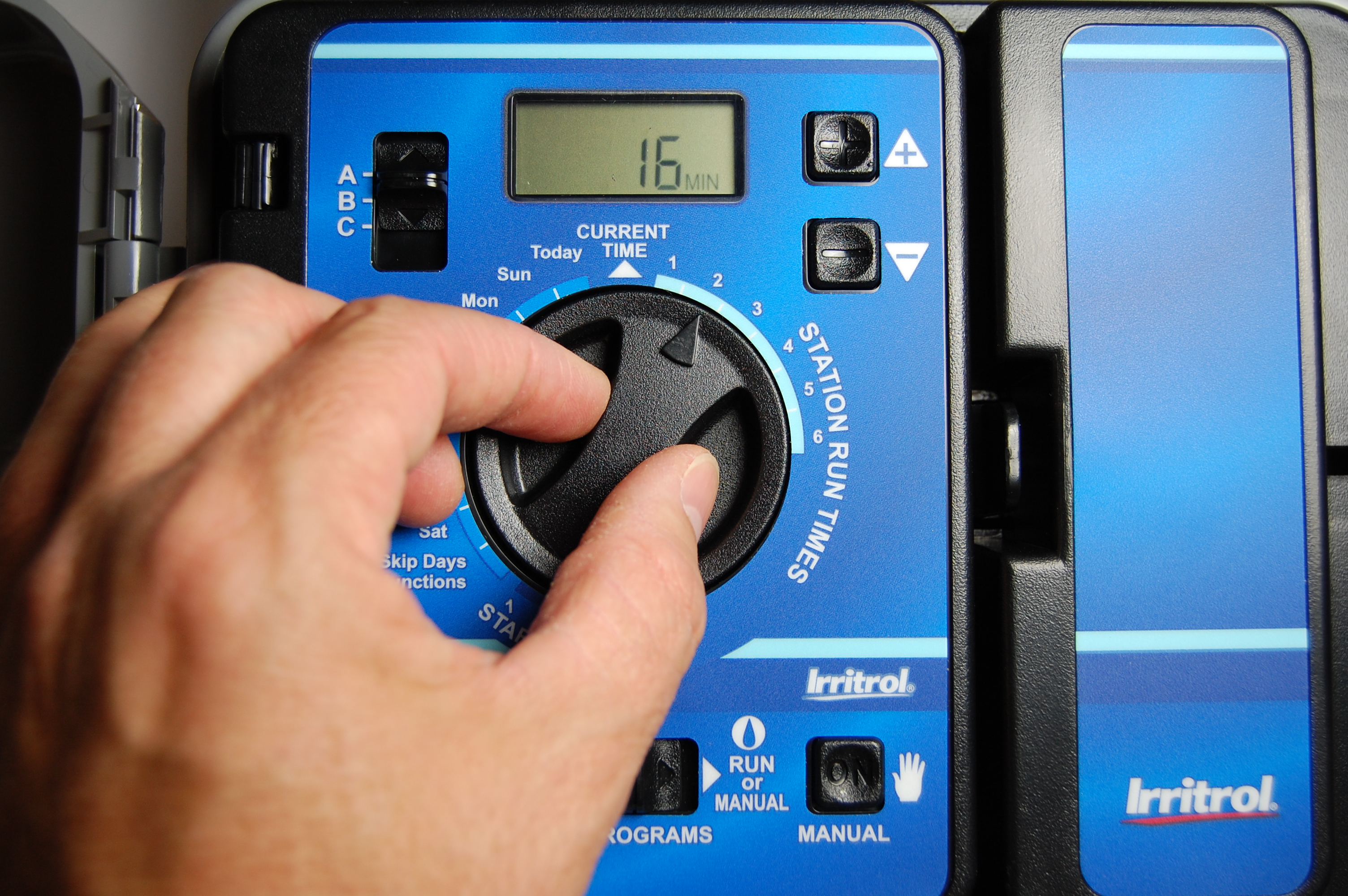
Adjusting Valve Run Times
It’s time to adjust your irrigation controller settings. Cooler weather means less watering.
Reset your controller run times to a less frequent interval. For a sprinkler system that is running three days a week, reduce the start time to two days or even one day depending on the temperature and recent precipitation. Don’t adjust the amount of time the valve is on (run time).
We still want to delivery enough water to penetrate the soil properly. In the fall the evaporation rate is lower so the ground will stay moist longer. For raised beds or gardens that have gone dormant or died off, turn off that valve station. Reset the run time for any drip or bubbler valves to one or two times a week as well. As temperatures continue to cool, reset valves to run only when the soil looks dry.
]]>
Rain. The perfect complement to assisting your irrigation system. In the southwest we welcome rain to our dry environment. It’s a chance to shut off your irrigation controller or initiate the rain delay feature on your controller if it has one. Controllers with this rain delay feature usually offer one to seven days of when the irrigation system will not turn on. After the specified period of rain day delays is reached your programming will re-start. If you shut down your controller manually don’t forget to turn it back on when your landscape dries out again. During fall, winter and early spring, evaporation rates and temperatures are low. Soil moistures rise and persist for longer periods of time.
It is a good time to save water. Nothing says water waste like sprinklers running in the pouring rain.

Irrigation systems consume the greatest amount of water, and the best opportunity to use water intelligently is in the way the irrigation system is installed and maintained.
There are also techniques for water usage, although on the surface they may not appear as simple water saving but as an efficient and smart transformation of water from one form to another.
Beyond the strictly visual beauty that plants provide in our homes and gardens, they can benefit us indirectly as well. Well located trees and shrubs can more than earn their keep by shading roofs and patios, thus lowering cooling costs. Well sited plants moderate winds and shelter our homes from weather extremes and can screen objectionable views.
Water delivered directly to the root zone area of a plant minimizes competition from moisture stealing weeds. Consistent timing of water applied allows plants to develop healthy root systems. Infrequent or erratic watering keeps a plant in a perpetual cycle of minimal growth and bare survival mode.
A drip emitter system is the most efficient method of providing this level of reliable water delivery.
Lawn grasses also benefit from correct water delivery and timing. Most grasses respond favorably by having their root zones wetted to the right depth depending on the growing season. Only a highly efficient and well maintained sprinkler system can deliver a consistent water application.
Watering in the early morning hours is the most effective time of day due to lower evaporation rates and generally calmer wind conditions. Sprinkler head spray patterns can have their shape distorted by gusting winds during the day producing an erratic distribution of water.
A consistent watering schedule with the proper amount of water applied promotes a healthy root system that makes your grass more water efficient and able to withstands greater periods of stress related to variable weather conditions.
Applying too much water is wasteful and can make the grass area susceptible to fungus or root related diseases.
Like trees and shrubs – the frequency of water applied to grass is dependent on the specific soil type the grass is growing in. Sandy soils need more frequent watering then moisture retaining clay soils.
When appropriate, adjust the run time for sprinkler areas that have a problem with water runoff by splitting the valve run time into two cycles 30-60 minutes apart to achieve the required watering rate.
The amount and duration of the watering cycle should be based on the particular type of grass and local climatic conditions.
]]>
Drip Emitter System
Problem – Wet spots appear where there are no plants. Fine dirt is coming to the surface at wetted areas. Drip emitters spurting water and not dripping. Water is not getting to every plant.
Diagnosis – Drip emitter lateral tubing has been punctured or cut. The ¼” tubing barb end has pulled loose from the emitter lateral tubing. Drip emitters are partially clogged and are not operating properly. Drip emitter is missing at plant location and water is spraying out of the ¼” tubing. Drip tubing is being constricted so water flow is reduced and water damages cn cause a lot of trouble, this are 7 Ideas For How To Find Plumbing Leaks and how to fix them.
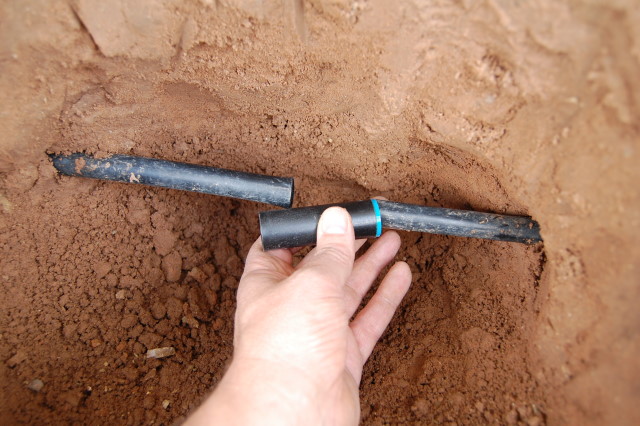
Repair Remedy – Excavate wet area and locate leaking tubing. Cut out damaged portion and reconnect using a compression fitting coupler. Locate hole in lateral tubing where ¼” barb was plugged in and seal with a goof plug. Using a drip emitter tubing hole punch, create a hole in the emitter tubing sidewall and reinstall the ¼” barb fitting with ¼” tubing. Replace any missing drip emitters with the same type. Check for kinks in tubing and replace with rigid fittings. For spurting emitters, tap the hole to see if that will clear any debris. Replace if it does not start dripping again.
]]> Component Description – The mainline is the pipe from the backflow preventer to the valves.
Always under pressure, it is typically the largest diameter and thickest walled pipe. The lateral line is the piping after the valve, only under pressure when the valve is turned on.
Causes of leaks: Some pipe and fittings can be affected by a quick water surge due to high pressure from the city mainline. This is called water hammer and it can significantly fatigue thin walled pipe and fittings. Mowers shearing off sprinkler heads, or broken risers. Raking off of drip emitters. Bubblers breaking off due to foot traffic. Digging with hand tools or trenchers in piping areas. In some areas gophers may pose problems.
Problem – Standing water or ground saturation along piping runs, valve boxes or around sprinkler heads. Fine soil being brought to the surface through a small hole. (Mainline breaks are very noticeable and immediately identified as such. Small cracks in the mainline may take more time to notice. There will be lots of water that eventually gets to the surface. A ruptured mainline is usually the result of a sharp blow from shovels or picks when digging. For example: a hole for a new plant. Knowing the location of the mainline can prevent it from being damaged).
Diagnosis – Piping is cracked. Loose or broken fittings at valve. Missing sprinkler head or misshaped or reduced spray pattern. Cracked fittings at sprinkler head or bubblers. Drip emitter fittings have come loose or are missing.
Repair Remedy – Piping- Shut off irrigation at backflow preventer or water shut-off valve.
Isolate the exact location of the break in the piping by digging down through the wettest area.
Excavate the area around the damaged pipe to have plenty of room to work. Determine the size of the cracked pipe and the extent of the break. Using a PVC pipe cutter or wire saw, remove the broken pipe. Acquire the replacement fitting.”Slip-Fix’ fittings are preferred due to their ability to telescope out to bridge the gap left by the removed pipe. Add coupler fittings as needed and use a good wet dry glue.
For soft poly pipe – isolate leak. Cut out damaged area and replace with a new compression fitting. Small holes can be sealed with a ‘goof plug’. Tighten all end cap fittings and replace lost drip emitters.
Water hammer prevention: Use a thicker class pipe. Support any mainline fittings with concrete thrust blocks.
After the repair is complete and you think some dirt may have entered the mainline; remove the top of the last valve and flush the lines by opening the backflow preventer. Replace valve top and activate the valves to test the new repair before backfilling over the pipe.
Irrigation Control Valve
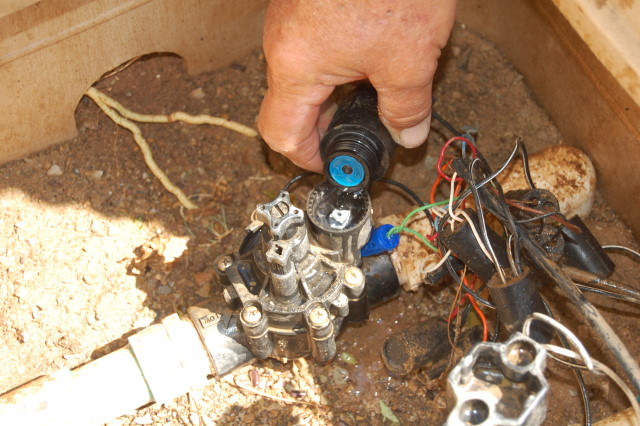
Component Description – An inline device that is opened and closed remotely by the irrigation controller to deliver water to an underground piping system.
Problem – Valve is not functioning properly- will not turn on
Quick Fix – Make sure the water supply has been turned on.
At the valve, check all wire connectors and splice connections. Look for frayed or damaged wire and repair. With the water shut off, remove the solenoid and inspect for any debris that may impair its operation. Be careful not to lose the plunger or small spring inside. When the solenoid receives a small electromagnetic impulse from the controller it is pulled into the upper part of the solenoid, opening a small hole in the valve body. This allows the transfer of water from the chamber above the diaphragm to the downstream side of the valve and the valve opens. With the solenoid removed have the valve actuated from the controller. If the solenoid is still good, the plunger will retract and you will hear a clicking sound. Loosen the screws on top of the valve and remove bonnet. Inspect for any debris. Replace all parts, turn water on and actuate valve again.
Problem – Valve is not functioning properly- will not shut off
Quick Fix – Turn off the water supply at the backflow preventer or water meter.
Follow same procedure as above.
Diagnosis – If the valve still does not actuate or the solenoid does nothing.
The solenoid is defective or worn out.
Diaphragm is worn out.
Repair Remedy – Replace solenoid. Take solenoid and write down type and model number to bring to irrigation parts store.
Remove top of valve and replace solenoid and diaphragm at the same time. It may be more economical to buy a new valve and just replace the whole top of the old valve.
Keep valves out of the dirt for ease of future repair.
Irrigation Controller
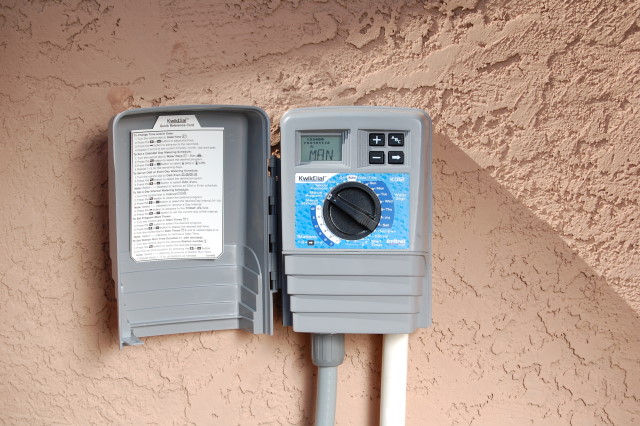
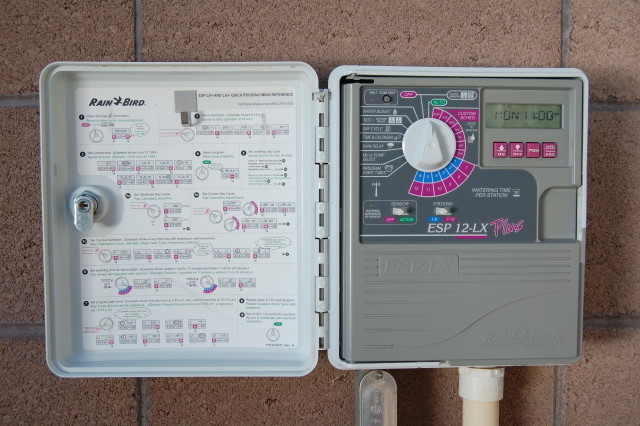
Component Description – Regulates the time and duration irrigation valves operate based on hourly and weekly schedules.
Problem- Controller not functioning properly-Panel readout not accurate or no display.
Quick Fix – Check power connection-unplug and remove battery backup to dissipate any static electric charge that may have built up. Check circuit breaker at main power service. Reconnect power supply and battery. Verify clock readout and time. Reprogram. Check all electrical connections. See if the controller manual has a trouble shooting program.
Problem – Controller not activating valves or only certain valves operate.
Quick Fix – Verify that each valve is on the correct station number.
Open controller face and disconnect the valve wire from the station that is not working and connect to another valve station. Check to see if the wire at the new station location operates the valve.
Diagnosis – If the valve still does not operate-
The control wire may not be connected properly or may be severed.
The valve may be malfunctioning and components need to be replaced.
If controller appears to be functioning correctly, see page #00 ‘Valve Diagnosis and Repair”
Repair Remedy– Locate break in wire and splice if possible.
Check for unused wires to be used as substitute.
Check that the valves are wired properly. A common wire should be connected in series to all the valves, typically the ‘white wire’, and a separate wire from the valve station at the controller to each valve.
Check all wire connections, splices and old repairs. (Use waterproof connectors).
Run a new wire from the controller to the valve above ground first to test.
Get solid strand 18 gauge minimum copper wire.
Final Repair Remedy – If all remedies have been tried there is the possibility that the controller may be malfunctioning. The inner workings of some controllers are manufactured so you do not have to remove the entire controller housing and power connection. Always shut down the power to the controller before removing any components. Also label all valves wire before disconnecting.
Tip: Replace controller backup battery every 6-8 months to prevent program from being lost.
]]>
There are two main types of battery operated controllers.
The first type of controller looks and performs like a standard irrigation controller. It is powered by (2) 9 volt batteries. It is a DC current controller and requires that the valve it operates have a “latching DC” type solenoid. This special solenoid can be purchased separately and replaces the solenoid that originally came with the control valve. This type of controller will not run AC type solenoids so be sure to get the same model replacement “latching DC” solenoid that fits your valve type. Refer to the manufacturer’s operating instruction manual for maximum wire run distance from the controller.
The second type of battery controller is for operating only one valve. It is installed directly into the solenoid port on each individual valve which is typically within a valve box. This can make accessing and changing programming difficult.
Water scheduling, run time features and programming typically function much like a standard electric irrigation controller.
]]>
The “default program” is the pre-determined run time setting programmed by the manufacturer. This run time setting is typically 10 minutes per station or valve to run every day. The controller will revert to this 10 minute setting if the battery back up is not installed and the controller is reset by the result of a power loss. It is a short term programming setting that will need to be adjusted immediately. Check your irrigation system run times to ensure that all grass areas and plant materials are getting the proper watering duration. Usually it is easy to tell when the controller is in default mode. Valves will turn on at different times and run for a shorter period.
]]>
A consistent watering schedule with the proper amount of water applied promotes a healthy root system that makes your grass more water efficient and able to withstand greater periods of stress related to variable weather conditions. Applying too much water is wasteful and can make the grass area susceptible to fungus or root related diseases.
The frequency of water applied to grass is dependent on the specific soil type the grass is growing in. Sandy soils need more frequent watering then moisture retaining clay soils.
Sprinkler zones will typically need to operate 2-3 times a week. Setting the valves in these zones to come on during the week (Monday, Wednesday and/or Friday for example) allows the grass to dry out enough by the weekend so mowing can occur.
If your controller has a watering schedule card, write down the valve numbers, run and start times and what zones they control, along with what program they are on. This will come in handy when you add the other valves on different programs so the start times do not conflict.
Adjust the start time intervals throughout the growing season. It is important for the sprinklers to have nearly the same ‘run time’ during the growing seasons (spring, summer, and fall) but adjust the ‘start times’ to water less frequently in the spring and fall. Most grasses will still need the same quantity of water just not as often. If it becomes evident that too much water is running off the grass and not soaking into the ground it may be necessary to split the time the zone is on into two start times. (Most controllers have multiple start times available. Typically this is for starting seeded lawn. For grass seed to germinate it needs water to be applied frequently, although for a shorter period of time than an established sod lawn).
For example: If the valve is on for 12 minutes, reset it to run for 6 minutes.
Set a second ‘start time’ to come on an hour later. Re-run the valve for both start times and check to see if water is still running off the grass. If it is, change the second ‘start time’ to a later time.
]]>